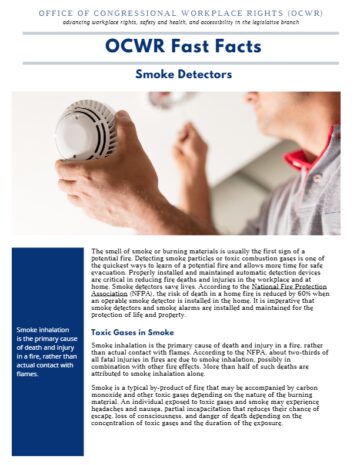
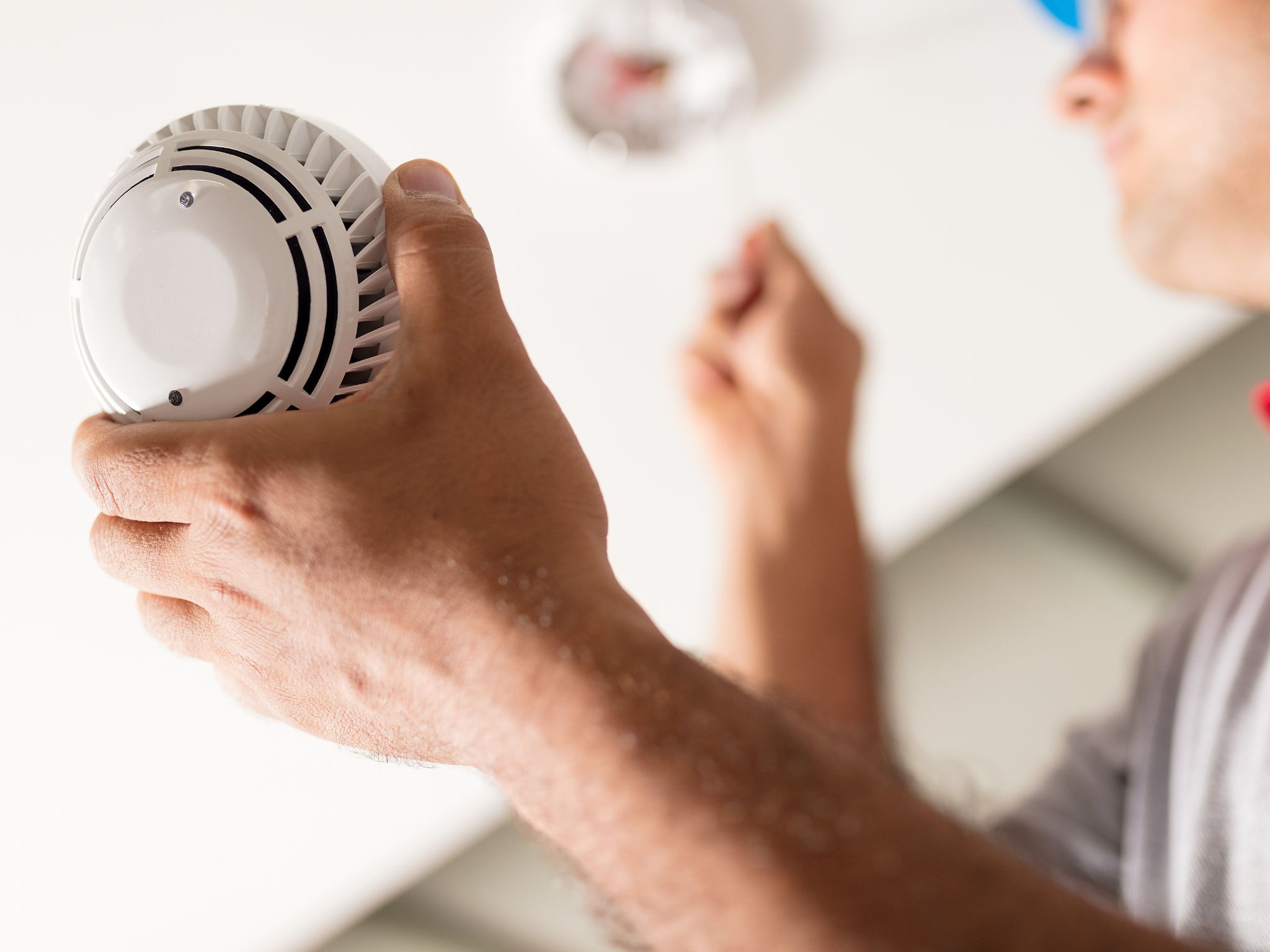
The smell of smoke or burning materials is usually the first sign of a potential fire. Detecting smoke particles or toxic combustion gases is one of the quickest ways to learn of a potential fire and allows more time for safe evacuation. Properly installed and maintained automatic detection devices are critical in reducing fire deaths and injuries in the workplace and at home. Smoke detectors save lives. According to the National Fire Protection Association (NFPA), the risk of death in a home fire is reduced by 60% when an operable smoke detector is installed in the home. It is imperative that smoke detectors and smoke alarms are installed and maintained for the protection of life and property.
Toxic Gases in Smoke
Smoke inhalation is the primary cause of death and injury in a fire, rather than actual contact with flames. According to the NFPA, about two-thirds of all fatal injuries in fires are due to smoke inhalation, possibly in combination with other fire effects. More than half of such deaths are attributed to smoke inhalation alone.
Smoke is a typical by-product of fire that may be accompanied by carbon monoxide and other toxic gases depending on the nature of the burning material. An individual exposed to toxic gases and smoke may experience headaches and nausea, partial incapacitation that reduces their chance of escape, loss of consciousness, and danger of death depending on the concentration of toxic gases and the duration of the exposure.
Smoke Alarm vs. Smoke Detector
Both smoke alarms and smoke detectors work by detecting tiny smoke particles and gases given off when a combustible material burns. Smoke alarms, most common in homes, sound immediately when high smoke levels are detected. Smoke detectors, typically used in commercial buildings, are part of a fire alarm system connected to a control panel. When smoke detectors sense smoke particles in the air, an alarm will sound, or the detector will transmit a signal to the control panel to notify an official to investigate the area where the detector was activated. During this time, the alarm system may initiate other actions, such as closing fire doors and activating the building’s smoke controls. If three minutes pass without an assessment of potential fire, Life Safety Codes NFPA 101 and NFPA 72 require that the building’s fire alarm system be programmed to automatically trigger an evacuation alarm.
Inoperable Smoke Detectors
Blocked and Covered
Smoke detectors should be covered with plastic bags when there is nearby construction or painting to prevent dust or paint contamination. New units come with covers to protect them from dust accumulation during shipping and while in storage. It is important to remember to remove the plastic covers after work is done or after installation and activation in order for the smoke detector to work properly.
Missing, Disconnected, or Dead Batteries
Missing or disconnected batteries are the leading cause of smoke alarm failures. NFPA reports that 35% of smoke alarm failures were due to missing or disconnected batteries, and 24% were due to dead or discharged batteries.
Home smoke detectors should be tested on a monthly basis to ensure the device is working properly. If the test button does not work, check the battery and replace it if necessary. If the smoke detector still does not work after changing the battery, the unit may need to be replaced. It is recommended to change the batteries in home smoke detectors every six to twelve months.